Archives For Corey

How to Buy Life Insurance

Corey —  October 28, 2009

If you’ve realized you need to buy life insurance and you’ve figured out what type of insurance you need and how much, your next step is to actually buy the insurance you need. With a few simple steps, you can make sure you buy the right policy for you without spending too much.

Gather Your Information

The first thing you should do before buying any kind of insurance is to make sure you really need it. Buying insurance you don’t actually need is a waste of money and should be avoided at all costs. When considering your need for life insurance, you need to ask yourself what will happen if you or your spouse dies. Would the survivor (you, your spouse, or your children) be able to manage without any insurance proceeds? If so, you don’t need insurance on that person.

If not, you need to ask yourself how much coverage you actually need. We’ve already looked at the issue of how much life insurance you need in a previous article. Make sure you’ve carefully determined this amount as it will be one of the main factors determining the cost of your insurance.

If you really do need life insurance and you’ve figured out how much coverage you’ll need, then you’ll need to decide if you need permanent life insurance or term life insurance. Most people will only need term life insurance. There are only a few reasons you might need permanent life insurance.

If a term policy is right for your situation, you need to choose a term length (10 years, 20 years, 30 years, etc.). How long you’ll need the coverage depends on the reason you’re buying the insurance. If it’s for income replacement, you’ll need the coverage until you would retire. If it’s to cover certain debts, you’ll only need coverage until those debts are paid off. The term length you choose will have a significant impact on the price of your insurance policy. But don’t try to save by choosing a shorter term than you really need.

While you’re shopping for insurance coverage, you’ll need some basic information about your health and financial situation. Have that information handy, and be prepared to undergo a medical examination before the insurance company will actually issue your policy.

Keep It Simple

When you go to purchase a life insurance policy, you’ll be bombarded with a variety of options (usually called “riders”) that you can add on to the basic policy. Your best bet is to stay away from these options. Generally, they are a bad deal for you but a great profit center for the insurance company.

For example, with a term policy you’re likely to be offered a “Return of Premium Rider”, which promises to return all the premiums you’ve paid into the policy if you keep it until the policy terminates (at the end of the term you’ve selected). However, you’re going to pay a higher premium for this “privilege”. If you were to instead invest that amount (the cost of this option), you’d end up better off in the long run even with a conservative investment portfolio.

The same goes for a “Waiver of Premium Rider”, which promises to cover the cost of your insurance if you should become disabled. You should not mix life insurance coverage with disability insurance coverage. Also, avoid the “Accidental Death Rider”, which usually doubles the amount of your life insurance proceeds if you die because of an accident. When you calculate your life insurance needs it doesn’t really matter how you die, you’re insuring the financial needs of your survivors because you died. How you died is not going to make a difference in calculating that need.

If you’re going for term insurance, you’re better off going with a basic, level premium term policy with no frills for a term length and coverage amount that will meet your needs. You’ll cover your other needs (like disability) with other insurance coverage specifically designed for that need.

Shopping for a Policy

You’ve figured out how much coverage you need, how long you’ll need it, and what kind of insurance policy you need (term or permanent). Armed with that information, you’re ready to start shopping around for insurance. You have a couple options here:

In Person or Over the Phone – You can shop for life insurance in person by going to or calling a life insurance agent or broker. The key issue here is the difference between an agent and a broker. An agent represents the life insurance company, and he is only bound by law to serve the best interests of the insurance company (not you). An agent may be a “captive” agent, which means they only work for one insurance company, or they may be an “independent” agent, which means they work for more than one insurance company. Either way, they are working directly for the insurance company as the company’s representative and they have no legal duty to serve your best interest. Agents can only get quotes from the insurance companies they work for, which means you might not get the most competitive rates.

On the other hand, a broker represents you and is bound by law to keep your best interests in mind at all times. Insurance brokers are working directly for you and do not work for the insurance company. They may provide you with quotes from any number of insurance companies, which helps you find the best rates available. They are also required to clearly disclose their compensation for selling you a policy. It should be clear that I would strongly recommend working with a broker whenever possible. Ask your family, friends, or a trusted advisor (accountant, lawyer, or financial planner) for a recommendation of a good insurance broker. If you can’t get a recommendation, search for insurance brokers in your phone book or online and meet with several to find someone you trust. Generally, these brokers will be able to help you with other insurance policies as well (auto, homeowner’s, disability, etc.) so you’ll want to get someone you can enjoy working with and believe to be trustworthy.

Online – The Internet has made it very easy to get insurance quotes with little hassle or time. There are a wide variety of online insurance quote services available, which is obvious with a simple search. Insure.com is one of the best sites to get life insurance quotes as they ask you pertinent questions and outline the requirements you’ll need to meet to qualify for the policy quotes they provide. If you have a complicated situation or want to talk to someone in person, you can try Accuquote.com or call them at 1-800-442-9899.

Get Multiple Quotes

You may be tempted to get the first Cheap Term Life Insurance plan out there, but make sure to do your homework. Regardless of the method you choose, be sure to get multiple quotes. Also, keep in mind that if you’re married the best deal might involve using separate insurance companies for you and your spouse. These warnings are especially important if you choose to use a life insurance agent because they will be limited in how many companies they can get quotes from. This is an important decision, so make sure you give it the time and consideration it deserves.

Questions?

If you have any questions, feel free to leave them in the comments. I always do my best to answer readers as soon as possible. Thanks!

Show Me in the Scriptures…

Corey —  October 27, 2009

       A reader recently left a comment on my post discussing how much you should have in your emergency fund. Frank said:

Could you please show me in Scripture where it says believers are to have an emergency fund?

Thank you.

       I responded to Frank’s question in the comments, but I think this is an important enough issue to address in its own post.

       Not all personal finance advice can be backed up with a specific quote from Scripture. Does that mean it is bad or unchristian? Not in the least. If the advice follows the pattern of teaching and wisdom in the Bible, it can still be considered good advice for Christians despite the lack of a specific Biblical reference.

       For example, is there a specific Bible verse telling you that you should create a will? No. But it’s still a wise thing to do. Is there a specific Bible verse that tells us to update our résumés? Again, the answer is no, but that doesn’t change the validity of the advice.

       This concept doesn’t apply just to personal finance. Is there a Bible verse telling us to buckle our seat belts? Nope. But does that mean you’re trusting your seat belt more than God if you buckle it? What about looking both ways before you cross the street? Do you lack faith because you do this?

       The problem with applying the “show me in the Scriptures” test is that there is not specific advice for every single situation we will encounter in life. There are guiding principles and values that, along with God’s Holy Spirit, will help us discern the wise choices. But you’re not going to find Bible verses telling you to brush your teeth, stop eating at McDonald’s, or to take advantage of an HSA if you’re eligible.

       Scripture does contain many verses teaching us the importance of wisdom in handling our affairs. Here are a couple examples:

       The simple believes everything, but the prudent gives thought to his steps.

Proverbs 14:15 (WEB)

       The plans of the diligent lead surely to abundance, but everyone who is hasty comes only to poverty.

Proverbs 21:5 (WEB)

       Precious treasure and oil are in a wise man’s dwelling, but a foolish man devours it.

Proverbs 21:20 (WEB)

       The prudent sees danger and hides himself, but the simple go on and suffer for it.

Proverbs 22:3 (WEB)

       In fact, the entire book of Proverbs points to the importance of wisdom and its place in the life of those who follow God. But what about all the times Jesus told us not to store up treasures on earth? Or when He taught us not to worry about what we’ll eat and drink and wear?

       Tell me, what did Christ mean when He said do not worry or be anxious? What does it mean to worry or be anxious? Those words mean to be distressed, uneasy, and tormented with care about something (material things in this case). Christ’s solution was for us to “seek first the Kingdom of God”. Instead of being worried about how we’ll meet our material needs, we should be worried about how we’ll meet our spiritual needs – how will we serve God and draw closer to Him.

       You can be worried and anxious about material things whether or not you wisely plan ahead. I can have an emergency fund and still be worried about material things. I can not have one and still be worried about material things. Even if I have an emergency fund, I can stop worrying either because I have that money saved or because I trust in God’s provision. That brings us to the other main teaching of Christ about money.

       When Jesus taught about storing up treasures and serving Money what did He mean? What does it mean to be wealthy or rich or to have treasure? All those words denote an abundance, which means having much more than what is sufficient or needed. Jesus’ warnings about wealth were not to tell us that we should never use money appropriately to meet our needs. Jesus warned us instead of the danger in accumulating more than what we really need. He told us not to become consumed with money and wealth.

       There is a vast difference between being consumed with accumulating an abundance of wealth and planning wisely to have enough to meet our needs. In the same way, there is a huge difference between being occupied with worry and prudently foreseeing needs and dangers and preparing to face those situations. These two teachings that Jesus gave us are so often stretched to mean that we should never save anything at all for the future because that demonstrates a lack of faith. The truth is that Jesus taught us to:

  1. Give God and His Ways priority in our thoughts and lives.
  2.        

  3. Avoid storing up more money than we will need. (That is, not to let becoming rich be our priority in life.)

       Proverbs commends wisdom and many New Testament verses speak to the importance of providing for your own family. We are not taught to make ourselves a burden to others when it is within our power to care for ourselves. Instead, we are taught that if there are any among us who cannot provide for themselves it is our responsibility as fellow Christians to care and provide for those people. Jesus’ teachings combined with the rest of Scripture in no way preclude us from saving for the future, using insurance, or utilizing money in any other wise manner. What is forbidden is making Money our god – giving priority to accumulating more money than we really need instead of serving God.

       The real issue then becomes finding contentment in Christ and determining our true needs. The danger we face is allowing the world to dictate our needs and success (a bigger house, a fancy car, expensive clothes, etc.) instead of learning to live on enough (our daily bread). That is the bigger issue here and the battle all of us Christians face. Once we have submitted to God in our discontentment and covetousness, we will be able to make Money serve us and God’s Kingdom instead of allowing it to be our master. But these are all topics worthy of their own discussion (contentment, defining needs, and avoiding covetousness).

       Please share your thoughts on this topic in the comments. I’m looking forward to hearing from all of you!

       Do you want to eat healthier but you’re afraid it will be too expensive? I have three easy recipes you can combine to make a wholesome meal for less than $1 per serving. And it doesn’t taste like cardboard, either!

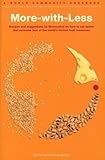
       These recipes come from the More-With-Less Cookbook, a collection of Mennonite recipes with a focus on affordable but nutritious meals. It’s also focused on moving away from processed foods and wisely using the world’s resources. I highly recommend you buy a copy if you don’t already have one. It’s a very affordable cookbook ($12.15 on Amazon) and a great value!

Middle Eastern Lentil Soup

Combine in soup kettle:

1 cup lentils
4 cups water
1/2 teaspoon cumin

Cook until the lentils are soft (about 30 minutes), adding water if needed to maintain a soup consistency.

Heat in skillet:

1 tablespoon olive oil

Add and sauté just until yellow:

1 onion, chopped
1 clove garlic, minced

Blend in:

1 tablespoon flour

Cook for a few minutes. Then add the sautéed ingredients to lentils and bring to a boil. After the soup boils, remove from the heat and stir in:

2 tablespoons lemon juice
salt and pepper to taste

Tomato Chutney

Combine in a bowl:

2 cups chopped fresh or canned tomatoes (about two medium tomatoes)
1 medium onion, chopped
3 tablespoons lemon juice
2 tablespoons vinegar
1 tablespoon sugar
salt and pepper to taste

Garnish with fresh cilantro, if available.

Rice

I hope you already know how to make steamed rice… :)

Fix up about 5-6 servings (1 1/4 to 1 1/2 cups dry rice).

The Meal

       Serve the Middle Eastern Lentil Soup over rice and top with the Tomato Chutney. This should make about 5-6 servings. Total cost per serving? $0.80! (Assuming you drink water, of course.) You could probably add a vegetable for an additional $0.20-0.30 per serving (or less if you use fresh veggies or grow them yourself). You can easily prepare and cook this meal in about 40 minutes. (Rice is easy, and you can fix the chutney while the lentils are boiling.)

The Nutrition

       Lentils are one of the healthiest foods you can eat. They’re high in fiber, folate, molybdenum, manganese, iron, and vitamins B1 and B6. They’ve also been shown to reduce the risk of heart disease. Serving lentils with rice ensures that you get the complementary proteins you need to match the complete proteins available in meats. The lack of meat, however, means that this meal is very low in cholesterol.

Eating Healthy for Less

       I plan to share additional recipes that will provide you with healthy meals at an affordable price. While this isn’t a cooking blog, it is about saving money. Saving money on your food bill shouldn’t come at the expense of your health. These types of recipes help you save money and eat healthier. In general, if you want to eat healthier and save money, follow these tips (from the More-With-Less Cookbook):

   Eat More:

  • Whole Grains- rice, wheat, barley, rye, oats, corn, and millet
  • Legumes – dried beans, soybeans, dried peas, lentils, peanuts
  • Vegetables and Fruits – inexpensive, locally grown, in season or homegrown and preserved
  • Nuts and Seeds – inexpensive, locally grown or homegrown

   Use Carefully:

  • Eggs
  • Milk, Cheese, Yogurt
  • Seafood
  • Poultry
  • Meats

   Avoid:

  • Processed and Convenience Foods
  • Foods Shipped Long Distances
  • Foods Heavy in Refined Sugars and Saturated Fats

Fresh tomato sauce by merci on Flickr       I stopped by the grocery store one day while I was in town. I needed to pick up some milk and a few other things. I wanted to get some more tomato sauce to keep my supply well-stocked since I just used some in a recipe for Beef Curry a week earlier.

       I generally go straight for the generic brand (Shurfine in this area), but there were a couple sales on the bigger cans of tomato sauce. The sale wasn’t on a well-known name brand, but it wasn’t a store or generic brand either. This 29 ounce can of tomato sauce was “on sale” for $1.50. The generic brand (Shurfine) 29 ounce can was $1.19. Not much of a sale if you ask me.

       I was about to grab the big can of generic brand tomato sauce when I saw the smaller cans on the shelf above. These cans were 15 ounces and they cost $0.59 each. Quick math tells you the small cans are a better deal. I can get two small cans (30 ounces) for a total of $1.18, or I can get one big can (29 ounces) for $1.19. So I can choose to pay 3.9¢/ounce or 4.1¢/ounce for the same product. Which size do you think I bought?

       Now, it might not seem like a big deal, and in this case it wasn’t really. (OK, I only saved a penny!) But if you watch for this kind of thing over the course of your entire grocery trip, you can save quite a bit of money. Do it every time you shop for groceries and you can significantly reduce your food bill for the year.

       So don’t grab the bigger can, carton, bag, or box because you think it’s a better value. Check the numbers first. It really doesn’t take long if you have a calculator (and most of us do if we carry a cell phone). And don’t automatically grab the smaller size either. It can pay to buy in bulk and store what you don’t need. Just make sure it really is a good deal before you throw it in your cart.

Frugal Tip: Check the price per unit to decide between buying in bulk or buying a smaller size.

       To find the price per unit, divide the total price by the total number of units for the item you’re considering. In the case above, I divided 118¢ by 30 ounces to get 3.9¢/ounce on the smaller cans. Remember: total price / total units = price per unit

       Life insurance is a no-brainer for families where both the husband and wife work outside of the home. But single-income families often neglect the value of all the work the stay-at-home spouse accomplishes every day. If the stay-at-home spouse passes away, how will the surviving spouse keep his or her job and accomplish all the things their spouse used to do? That’s why life insurance for a stay-at-home spouse can be a very important part of your financial plan.

How Much Insurance?

       To figure out how much insurance you need, you have to know how much income you need to replace. But what’s the value of the work a stay-at-home spouse does? This will largely depend on your personal situation. If you have children, the value of a stay-at-home spouse is going to be much higher than it would be for a family without children. Considering all the cooking, errands, child care, laundry, cleaning, and various other things a stay-at-home spouse can accomplish, you should consider the value of that spouse’s work as equivalent to a full-time job.

       Many life insurance companies will provide coverage for the stay-at-home spouse equal to the working spouse’s coverage up to $1,000,000. If you have children, it makes sense to purchase the same amount of insurance for both spouses. This way the surviving spouse could choose to stay at home and take care of the children and housework without having to worry about income. If you don’t have children, you may not need to purchase quite as much insurance for the stay-at-home spouse – but you’ll have to decide how much you would need if the stay-at-home spouse dies.

       I don’t agree with the calculations that say a stay-at-home spouse is worth $120,000 or more per year. As I mentioned before, the working spouse could choose to stay at home or work less after his spouse’s death. Yes, it would take adjusting to a new situation and learning new skills, but good luck finding a life insurance company that will give you a $2,400,000 policy on a stay-at-home mom or dad.

Don’t Forget Your Stay-at-Home Spouse in Your Insurance Planning

       When you’re determining how much insurance you need, don’t forget to consider insurance coverage for your stay-at-home spouse. There’s true value to all the work a stay-at-home spouse does every day, and trying to juggle a full-time job plus all the extra work your spouse did will amplify the stress of dealing with your spouse’s death. Don’t neglect the importance of life insurance coverage on your spouse even if they don’t get paid for all the work they do.

Raising a Cow for Beef: Month 2

Corey —  October 21, 2009

Paul & Bambi - 2 Months Old

       Meet Bambi, our two month old steer. My wife and I are raising him for beef. I highly doubt we’re going to save much money by raising him ourselves. Looking at the feed costs alone, we might end up ahead. But it’s the time spent feeding and caring for him that will ultimately make this a break-even or money-losing experiment. I’m going to track the costs and time that go into raising Bambi and share that information with you all in monthly updates until he goes to the butcher (probably in Spring 2011).

How We Got Bambi

       My wife and I live in the southern part of Lancaster County, Pennsylvania, which is home to many dairy farms. I’d say that well over half of the families in our church either currently are or were once connected to the dairy industry (either working on the family farm, selling feed, trucking milk, or doing custom farm work). It’s through one of the families at church that we received Bambi.

       Konrad, the youngest of the family and the one in charge of breeding and feeding the family’s herd, had been trying to breed a Jersey heifer into the herd. He bred one of their small Holstein cows to a Jersey bull and got a heifer a while back. Once she was old enough, he bred her to another Jersey bull but this time he got a bull – Bambi.

       Bambi was a bit premature so he was rather small when he was born. Dairy farms rarely keep bull calves, especially small ones, unless they’re going to raise them for beef or use them for breeding. Bambi was destined to go off on the truck and he faced a grim future. Because he was so small, he probably wouldn’t bring much money and the farm would end up with a bill because of the transportation costs. Konrad offered to let us have Bambi for free if we wanted him. I thought it would be fun, and Michelle couldn’t say no after she met Bambi.

       Konrad kept Bambi long enough to get him dehorned and castrated when the vet (another member of our church) came by the farm. We got Bambi on August 31st, a week and a half after he was born (on August 21st). He’s two months old today, and he’s finally off milk replacer (powdered milk designed especially for calves). Here’s a picture of me with Bambi on the night Konrad dropped him off:

Paul with Bambi at one and a half weeks old

The Costs and Time

       I’ve been tracking the costs and the time spent on Bambi so far, not including recreational time. (We sometimes take him on walks around the yard or through the corn fields surrounding our house. Yes, that does sound weird.) It has been taking about 10 minutes each time to feed Bambi while he’s been on milk, and we’ve had to do that twice a day since we got him. Plus, I had to spend some extra time getting things ready for him. I expect the time commitment to go down a bit now that he’s off milk, but we’ll see. Here’s what we’ve spent so far:

  • Cost of Bambi – Free, my favorite price!
  •        

  • Castration & Dehorning – $16.00
  •        

  • Milk Replacer – $45.54 (You’d technically only need half that for one calf, but since we only have one calf we fed it all to him. I guess we could have sold the extra to a farmer, but then we would have needed to buy more calf feed.)
  •        

  • Calf Feed – $10.84
  •        

  • Miscellaneous – $39.90 (This was for stuff like buckets, a collar, a chain and connectors, some medicine, etc. We shouldn’t need to spend much more in this category for a while.)

       So far we’ve spent a total of $112.28 and 30 hours of time. The next thing we’ll need to buy is some hay for the winter, more calf feed, and eventually some corn. I’ll be gleaning some fields around here for corn, and there’s a family at church with a machine that can grind it to the right size for Bambi. But eventually I’ll need to buy some corn.

       This is not an experiment in exactly how much it costs to raise a cow for beef. We have a unique situation, and we’ll probably have some options that others won’t. For example, we happen to have a barn on the property we rent and our landlord (who happens to be my father-in-law) is OK with us keeping Bambi in the barn. We’ll also have access to some equipment and resources that others may not, which will help us keep our costs low. So keep that in mind when looking at the money and time we spend on Bambi. This is just a record of our experience and results.

Get Free Updates!

       If you’re interested in tracking Bambi’s progress and our results, sign up for free updates to Provident Planning. I’ll be providing updates on Bambi every month until it’s time to butcher him. In the meantime you’ll get great, free content about ways to save money, manage your personal finances, and learn about personal finance in the Bible. This offer comes with a 400% money back guarantee and you can always unsubscribe at any time. (And don’t worry about spam. Your email will never be sold or given to anyone else for any reason at all.) You can’t lose!

How Much House Do You Really Need?

Corey —  October 20, 2009

A. H. Allyn Mansion by cliff1066TM on Flickr
       The median size of a new home in America has grown from 1,200 square feet in 1940 to over 2,200 square feet in 2008. And it’s not because our families are getting bigger – the average household size has shrunk from 3.7 to 2.6 in that same time period. Discontentment has fueled the false need for more space. Larger families thrived in smaller homes in the old days. And most families around the world live in small homes today. It’s not that we need all this extra space. We just want it.

       The problem with our imaginary need for bigger houses is that it artificially inflates home and land prices. These increased prices and our “need” for bigger homes stretches our finances far beyond the amount we can afford.

But It’s a Good Investment!

       The myth of a home as a good investment has also led us to believe that more is better. First, look at the costs. What other “investment” can you buy that has maintenance costs of 1-3% a year, is taxed every year, needs to be insured, and needs to be filled with furniture all while appreciating at about the rate of inflation? Yes, mortgage interest and real estate taxes are tax deductible, but the deduction is not as good as you think. Homes have the highest costs for some of the lowest returns of any investment option out there.

       Second, for a home to really be an “investment” you have to be able to get your money back out of it. Otherwise, it doesn’t really matter how much it has appreciated – that growth does you no good if you can’t touch it. So let’s look at your options. You can sell your home and downsize, you can get a home equity line of credit, or you could get a reverse mortgage (if you qualify). The HELOC and reverse mortgage are terrible ideas and only detract from the idea of your home being a good investment. The costs for those options far outweigh any benefits of owning a home as an investment.

       As for the other option, how many people do you know that have actually sold their home and downsized to access the growth of their “investment”? Some do, but most people look at that option as constricting and undesirable. They’ve built their life around that home and created many memories there. They don’t want to leave if they don’t absolutely have to.

       The truth is we only think of a home as a good investment because we fail to track all the costs accurately. If we kept good records, most of us would probably find that it’s pretty much a wash. A home is not an investment. It’s a liability and expense. You’ll save yourself a ton of money if you learn to look at it that way.

The Issue of Space

       Once we can stop looking at a home as an “investment” (and stop using that as an excuse to buy more house), the next thing we need to consider is just how much space we really need. If you’re struggling to figure out how you can afford to buy a house, going through this thought process could help you determine that a smaller house would meet your needs just as well.

       My wife and I rent a house with about 1,500 square feet of livable space. Based on how we’re using this space, I know we could live in 1,000 square feet or less quite easily. Yes, the extra space is nice, but we don’t need it. If we needed to make cuts in our budget, we could try moving to a smaller place. (Though it would be difficult to find anything for much less than what we’re paying to rent this place!)

       Consider your actual space needs before deciding you must have a certain house. Take bedrooms for example. How much time will you actually spend using your bedroom while you’re awake? Unless it’s extremely cramped, you’re not going to care much about how big your bedroom is while you’re sleeping in there. If you have children, can they share a room? Although most kids in our culture today have their own room, it’s not a necessity.

       If you feel like you need more space because you have so much stuff you need to store, consider selling or donating the things you don’t really use. The extra space you free up can help you downsize or just give you extra space you can do something useful with.

       I’m not saying you should make yourself miserable, but you should carefully consider your needs before stretching yourself to buy more house than you can afford. Just because a bank is willing to loan you a certain amount of money doesn’t mean you should use all of it to buy your house. Just because a Realtor suggests that you can afford a bigger house doesn’t mean you should believe them. They have a conflict of interest in convincing you to buy more house than you really need.

       The point is this – don’t convince yourself or let someone else convince you that you need to buy a bigger house than you really need. If you’re going to be pushing the limits of your budget, back off for a bit and consider your true needs. Reevaluate your situation and see if a smaller house would do just as well. Then look for the house that matches your needs rather than the house that’s just under the maximum amount you can borrow.

       Housing is by far the biggest cost in most budgets. If you can save a good chunk of money in this one area, you’ll have a much easier time staying on top of your finances and reaching your goals.