


Looking for a cheap, natural way to kill weeds? Here are 6 recipes you can use.
1. Boiling Water
No recipe here. Simply pour boiling water over the offending weed and it will die. Be careful though. Boiling water can’t tell the difference between a good plant and an evil weed, so pour with discretion. This can be the cheapest weed killer by far if you use boiling water left over from cooking. (If you need to drain the food, simply catch the hot water in another pot.)
2. Vinegar
Vinegar mixed with a bit of liquid soap is quite effective as a weed killer. The general ratio is one ounce of soap (a good squirt) to one gallon of vinegar. If you’re mixing up a smaller batch, just use less soap. The vinegar is made of acetic acid, which will remove the moisture from the plant. The soap just helps the vinegar stick to the plant’s leaves. Vinegar that’s 5% acidity will work OK, but 10% or 20% acidity is better. You can find the stronger vinegar at garden supply stores.
This solution works best on a hot, sunny, dry day. You’ll kill anything you spray, so be careful around the plants you want to keep. Vinegar as weed killer will only kill the foliage of the plant – not the root. So repeat applications may be necessary for success. But hey, it’s cheap so it won’t cost much to do it a few times.
Finally, don’t add salt to the solution. Some recipes tell you to do so, but you’ll make the ground unsuitable for just about any growing thing for quite some time. You don’t need it to successfully kill the weeds. (Although salt would be great if you never want anything to grow there again for a while. Cracks in the sidewalk or your driveway come to mind.)
3. Bleach
Personally, I wouldn’t use this because it’s toxic and not best for the groundwater. (That matters to me because we get our water from a well.) But you won’t be using much, so I’m not sure it’s that big of a deal. Simply put some bleach in a spray bottle with a little soap and mist your weeds. Again, it’ll kill everything so aim carefully. (On second thought, this doesn’t qualify as natural or organic but it’s cheap and homemade.)
4. Rubbing Alcohol
Rubbing alcohol will also draw out moisture from weeds. Mix about one tablespoon of rubbing alcohol for every cup of water in your spray bottle. Apply just like the vinegar or bleach solutions above.
5. Corn Meal
Corn meal isn’t really a weed killer, but it can be used to keep weed seeds from sprouting. Actually, it’ll keep any seed from sprouting. Technically, you want corn gluten meal but that can be expensive if you get it from a garden supply store. Here’s a hint: go to an animal feed store. You can get corn gluten meal much cheaper there.
You can use cornmeal that you buy at the store as well, but it won’t be quite as effective. On a different note, regular cornmeal is also useful as a fungicide. You can get regular cornmeal much cheaper (and in bulk) if you buy agricultural grade cornmeal. Just don’t eat it.
6. Elbow Grease
OK, so this one doesn’t really count but it works. You don’t have to buy anything, and you don’t have to worry about harmful side effects on the environment, your kids, your pets, or yourself. Plus, it’ll help you get some exercise and relieve stress (maybe…). You’ll have to spend your time pulling the weeds, but if you get the roots you’ll be very effective.

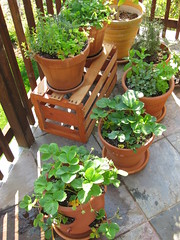 Container gardening is a great choice if you have limited space or limited desire to garden. It doesn’t take much time and you don’t have to worry about weeds. But you still get to enjoy the vegetables of your labor. You can use just about any container you can get your hands on (as long as it won’t leach poisonous chemicals into the soil). It doesn’t even need to be very deep – you can grow quite a bit of stuff in just six inches of soil. (I know. I’ve done it!) You’ll just need a few holes in the bottom for drainage. You can find cheap options for containers by looking creatively around your house, going to yard sales, or stopping by your local thrift store.
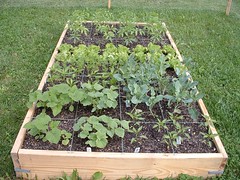 Raised beds are just a variant of container gardening. Put a few boards together with screws, cover the ground with landscaping cloth (to reduce weeds), and throw in some soil. Now you’ve got one giant container for your garden. It should be at least six inches deep, and you’ll need somewhere to put it. Full sun is best, but you can grow all sorts of vegetables in partial shade. If you find you need to grow more stuff but don’t want to rip up your yard, you can just build another raised bed. Easy expansion!
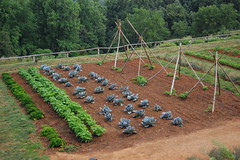 This is the typical image that comes to mind when we talk about gardening – a rectangular piece of ground that’s been tilled up and is ready to plant. This option can require the most work and/or money. You don’t have to buy the soil, but you’ll probably need to add something to it and you’ll have to work it. Oh, and you’ll need the space and willingness (or permission) to tear up a patch of your yard!